Journal · 8 min
ISI certified ceramic cookware: what the label actually buys you
ISI certified cookware, PTFE and PFAS free coatings, forged bodies — what each claim means for your ceramic tawa, wok or kadhai, and why they matter together.
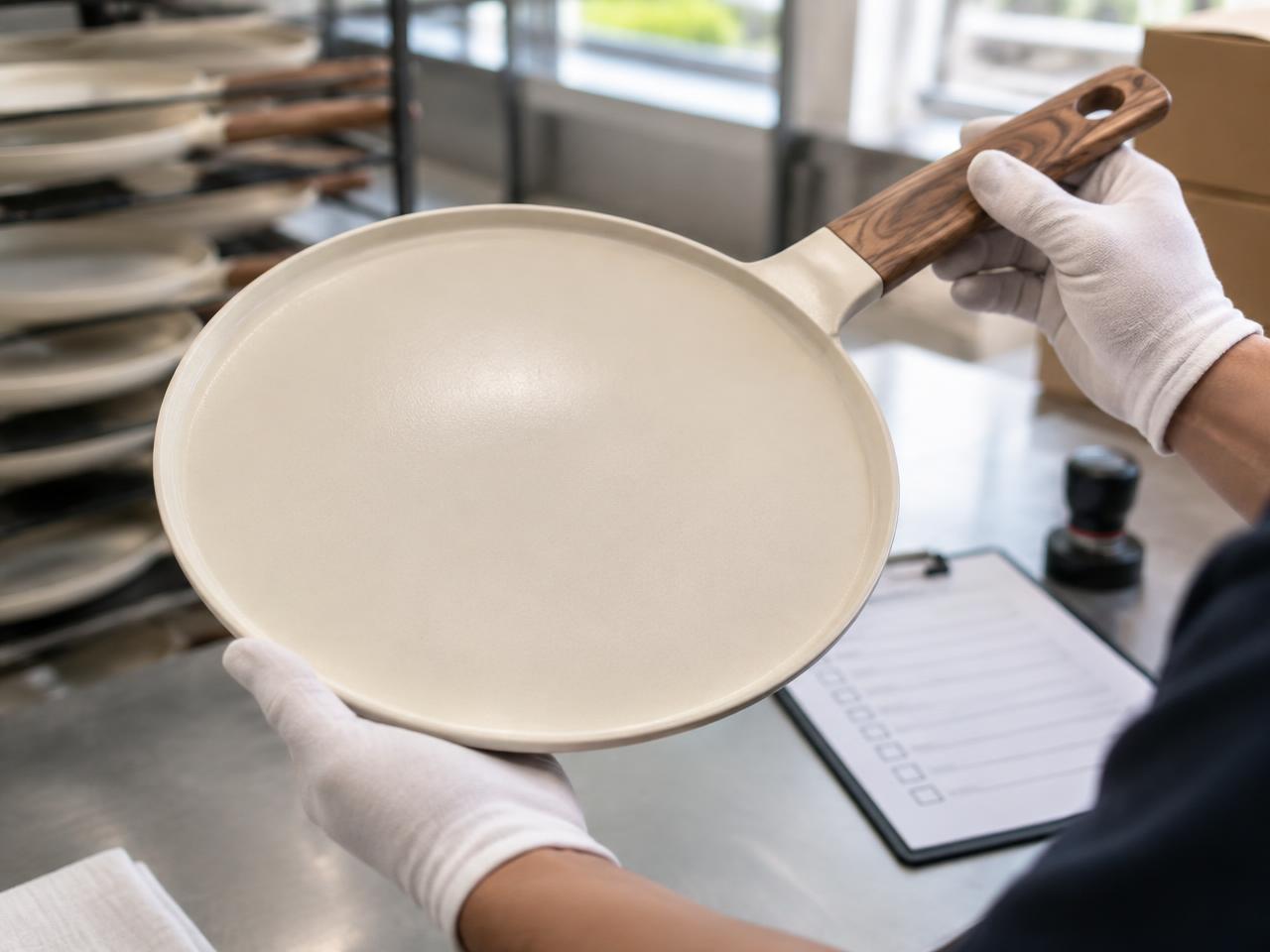
Cookware marketing is full of words that sound reassuring and mean very little. “Non-stick”, “granite”, “healthy coating” — none of these are regulated claims. Certification is different. A certification mark means an independent standard exists, the product was tested against it, and the manufacturer is accountable to it. This guide walks through what ISI certified ceramic cookware actually gives you — whether you're buying a ceramic tawa for dosas, a ceramic wok or kadhai for curries, or a everyday frypan — claim by claim, so you can read any pan's label, ours included, with clear eyes.
What ISI certification means
The ISI mark is issued by the Bureau of Indian Standards, the national standards body. For cookware, certification means the product conforms to a published Indian Standard covering things like material quality, construction, coating adhesion and safety for food contact. It is not a one-time badge: certified manufacturers are subject to ongoing surveillance, including factory inspections and sample testing.
For a buyer, the practical meaning is simple. An uncertified pan asks you to trust the seller. A certified pan has been checked against a standard you can look up. Stellyfire cookware carries ISI certification, and our certification reports are available on request.
PTFE, PFOA and PFAS — the chemicals ceramic avoids
Traditional non-stick pans use PTFE, a fluoropolymer better known by the brand name Teflon. PTFE itself is stable at normal cooking temperatures, but it begins to degrade when overheated above roughly 260°C — easy to reach on an empty pan over a high Indian flame. Older PTFE production also involved PFOA, a processing chemical now phased out over health concerns.
PTFE belongs to a wider family of chemicals called PFAS, sometimes called “forever chemicals” because they persist in the environment and the body. A ceramic coating is mineral based — it is derived from sand-like inorganic material and contains no PTFE, no PFOA and no PFAS at all. That is not a performance claim; it is simply what the material is.
Why “forged” matters as much as the coating
Most cheap non-stick pans are stamped from thin aluminium sheet. Thin metal heats unevenly, warps over high flame, and once the base warps, the coating fails with it. Forging compresses the aluminium body under pressure, producing a denser, thicker pan that spreads heat evenly and holds its shape.
You feel the difference in daily cooking: fewer hot spots burning one side of a dosa while the other stays pale, and a base that still sits flat on the stove years later. The coating gets the headlines, but the body decides how long the pan lasts.
Everyday benefits you actually notice
Certification and chemistry aside, ISI certified ceramic cookware earns its place in the kitchen through small daily wins — on a ceramic tawa at breakfast, a ceramic wok or kadhai at dinner:
- Clean release with less oil — eggs, dosas and cheelas need a film of fat, not a pool
- No flaking synthetic coating into food as the pan ages
- Even heat across the base, so masalas fry instead of scorching in patches
- A surface that tolerates the metal-spoon accidents of a busy Indian kitchen better than soft PTFE
- Easier washing — most residue wipes off with a soft sponge
How to verify a certification claim
Any brand can print “certified” on a box. Verifying takes two minutes: look for the ISI mark with a licence number on the product or packaging, ask the brand for the certification report, and check that the mark covers the actual product you are buying, not a different line from the same factory. A serious brand will share its reports without hesitation — we do.
The bottom line
Certified ceramic cookware is not magic, and no pan makes food healthier on its own. What certification buys you is verified construction and honest materials: a mineral coating with no PTFE or PFAS, a forged body that heats evenly, and a manufacturer held to a published standard. Cook on medium heat, care for the surface, and a good ceramic pan will outlast several rounds of ordinary non-stick.