Health & safety
Nothing in the coating you'd rather not eat.
Most kitchens in India replace a non-stick pan when it starts flaking. The better question is what was flaking, and where it went.
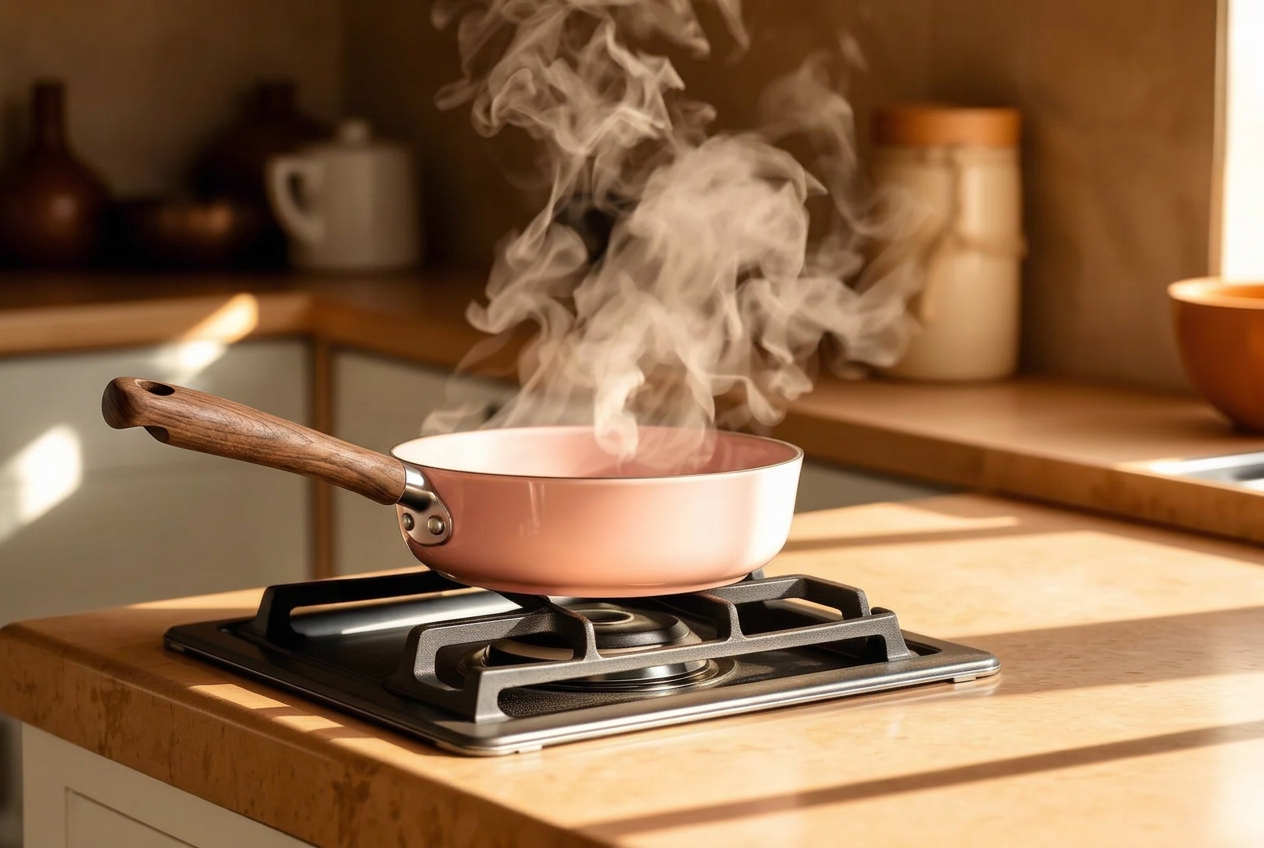
Cooked on medium heat, with a thin film of oil — the way ceramic is meant to be used.
Layer by layer
Tap through the construction.
Two pans can look identical on a shelf and be built from completely different chemistry. Switch between them to see what actually sits between the flame and your food.
A mineral surface, cured onto forged metal.
1. Mineral ceramic release layer
Sol-gel ceramic — no fluoropolymers
2. Bonding coat
Cured at high temperature, not sprayed on cold
3. Pressure-forged aluminium body
Thick base, spreads heat sideways
Wears down slowly and visibly. Nothing in the PFAS family to shed into food.
The vocabulary
Three acronyms worth understanding.
- PTFEPolytetrafluoroethylene
- The fluoropolymer behind classic non-stick. It performs well until it's scratched or overheated past roughly 260°C, at which point the coating begins to degrade and shed.
- PFOAPerfluorooctanoic acid
- Historically used to manufacture PTFE coatings. Phased out by most manufacturers, but its legacy is exactly why buyers now read labels carefully.
- PFASPer- and polyfluoroalkyl substances
- The broader family these chemicals belong to — nicknamed 'forever chemicals' because they don't break down easily in the environment or the body.
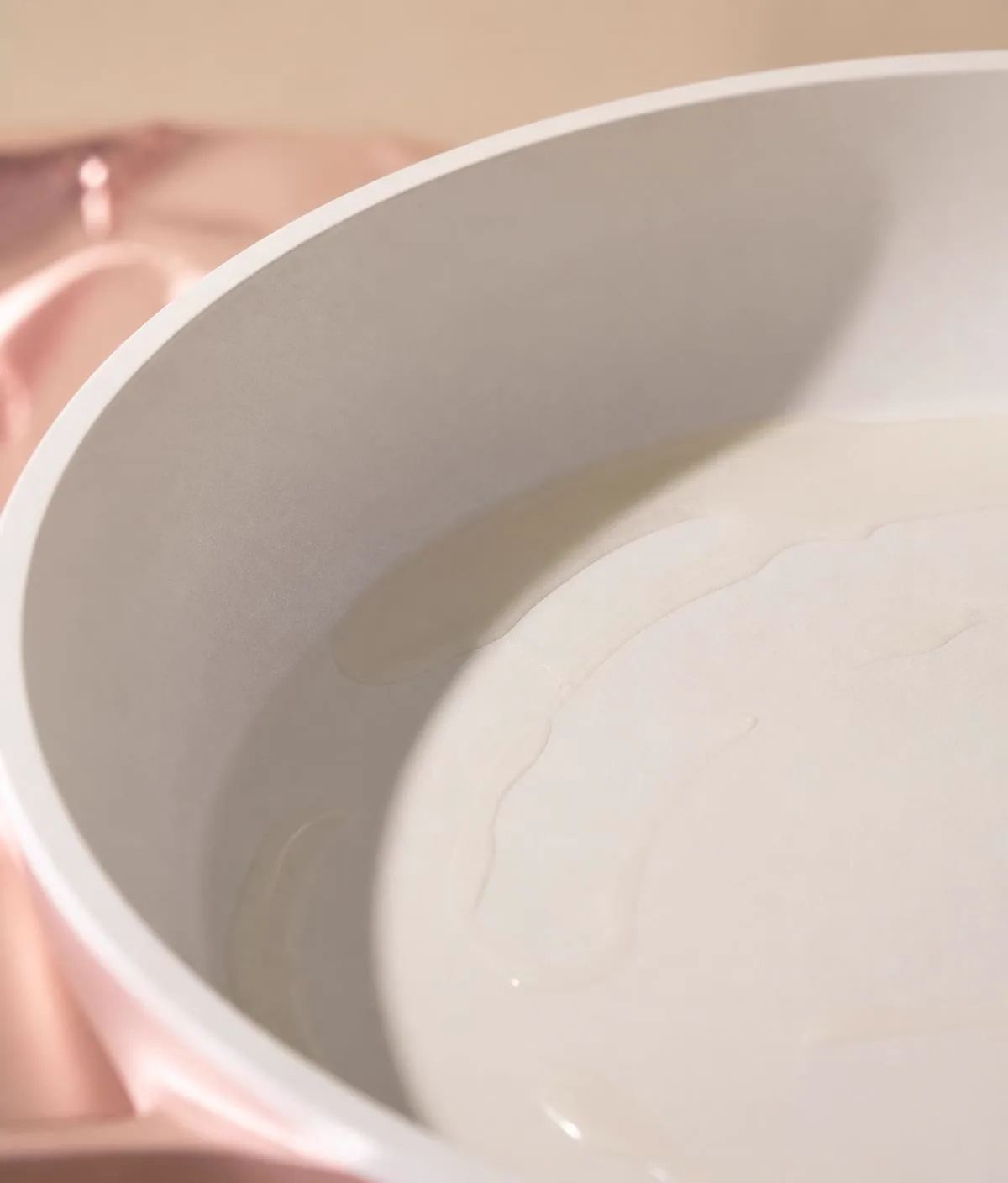
How Stellyfire is built
Safety as construction, not as a claim.
Mineral, not fluoropolymer
Our release surface is a sol-gel mineral ceramic. There is no fluoropolymer chemistry in it to begin with, so there is nothing of that family to flake into your food.
ISI certified
An independent Indian standards body tests and certifies the product. That's a third-party verdict, not a brand's self-declaration on a box.
Documented, not just claimed
Coating compliance documentation is available on request — the same paperwork we hand to certifiers, available to any customer who asks for it.
Less oil, by design
A genuinely slick surface means rotis without ghee and eggs without oil. Customers on low-oil diets tell us this is the change their doctor actually noticed.
When a coating starts to flake
A flaking pan is not a cosmetic problem. Once the release layer breaks up, fragments end up in the food and the exposed metal beneath heats unevenly, which burns whatever sits on it. Every honest answer to "can I still use it?" is the same: no.
Ceramic doesn't peel in sheets the way a damaged fluoropolymer film does. It wears down gradually and visibly, so a Stellyfire pan tells you long before it needs replacing — and the 1 year warranty covers coating defects that shouldn't have happened at all.
How to keep it safe for years
- Cook on low to medium heat — ceramic transfers heat efficiently, so you need less of it.
- Never preheat an empty pan for long. Add oil, ghee or food within the first minute.
- Use wooden or silicone tools. Metal edges are the single biggest cause of early wear.
- Let the pan cool before washing. Cold water on a hot base is what warps it.
- Store with a cloth or pan protector between stacked pieces.